01 · Basis
Which plan?
Original budget, latest forecast or another named scenario.
Variance analysis for FP&A
Précis prepares actual-versus-plan comparisons from named scenarios, then carries the investigation through approved hierarchies and permitted source detail. Finance decides what is material, tests the explanation and owns the commentary.
| Line / driver | Actual | Budget | Vs budget | Prior year | YoY |
|---|---|---|---|---|---|
| Revenue | 7,420 | 7,650 | −230 | 7,110 | +4.4% |
| Direct costs | (4,560) | (4,440) | −120 | (4,320) | −5.6% |
| Gross profit | 2,860 | 3,210 | −350 | 2,790 | +2.5% |
| Gross margin % | 38.5% | 42.0% | −3.5pp | 39.2% | −0.7pp |
| Operating costs | (1,240) | (1,280) | +40 | (1,180) | −5.1% |
| EBITDA | 1,620 | 1,930 | −310 | 1,610 | +0.6% |
| EBITDA margin % | 21.8% | 25.2% | −3.4pp | 22.6% | −0.8pp |
| Billable hours | 62,840 | 64,200 | −1,360 | 60,910 | +3.2% |
| Realised rate | €118.1 | €119.2 | −€1.1 | €116.7 | +1.2% |
| Utilisation % | 74.8% | 76.0% | −1.2pp | 73.5% | +1.3pp |
| Avg FTEs — billable | 142 | 140 | +2 | 137 | +3.6% |
| Avg FTEs — overhead | 40 | 40 | — | 39 | +2.6% |
| Avg FTEs — total | 182 | 180 | +2 | 176 | +3.4% |
Beyond actual minus budget
An explanation depends on which budget or forecast version was selected, which accounts make up the line, which organisational hierarchy applies and whether the movement is concentrated in a period, business unit, cost centre, project or another driver.
When those choices are rebuilt in each workbook, finance spends the review checking the analysis before it can discuss what the analysis means.
01 · Basis
Original budget, latest forecast or another named scenario.
02 · Definition
The approved statement mapping and sign convention.
03 · Structure
The organisational view finance intends to explain.
04 · Driver
The permitted operational or transaction detail behind the total.
One comparison, then narrower questions
| Period | Scenario | Service line | Engagement | Amount |
|---|---|---|---|---|
| 2026-Q1 | Actuals | Cloud & Infrastructure | Engagement #2845 | −185,000 EUR |
Comparability before commentary
The same metric definition, account mapping, scenario registry and hierarchy used for the headline comparison remain in force through the drill-down. Rates and percentages are recalculated according to their governed aggregation rule rather than summed as if they were currency.
If the requested comparison, dimension or detail is unavailable, Précis says so. It does not fill the gap with a plausible explanation.
Generic database MCP vs a governed finance MCP server →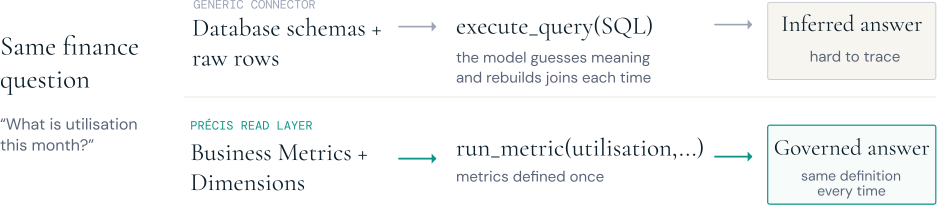
Prepared, not concluded
Thresholds can help organise a review, but materiality is contextual. A small movement may matter because it changes a covenant, exposes an operational issue or contradicts the assumptions behind a decision. A large movement may be timing already understood by the business.
Précis prepares the comparison and the route through the evidence. The analyst decides which movement deserves attention and what the business should take from it.
AI variance analysis: a worked budget vs actual example →The movement is concentrated in Cloud & Infrastructure, where two enterprise engagements are now scheduled for Q2. Finance review required before publication.
Source context · Actuals through March · FY26 budget v2.1 · engagement detail available
Part of the reporting workflow
Variance analysis can feed the recurring management report, an ad-hoc investigation or an Excel workbook. Because those outputs call the same governed definitions, the explanation does not need a different version of the number for each interface.
Questions finance teams ask
Variance analysis compares an actual result with a budget, forecast, prior period or another approved basis, then investigates the dimensions and operating drivers behind the movement. The calculation is only the start; finance still determines materiality and what the movement means for the business.
Yes, where those scenarios are configured and the user has access. Scenarios are named in the finance registry so the comparison basis is explicit rather than inferred from a workbook tab or column label.
Précis can filter an approved hierarchy node and show its immediate children, allowing finance to move through the organisation one level at a time. Available dimensions and members remain constrained by the finance model and the caller's permissions.
Précis can assemble the governed figures, supporting cuts and a concise draft. Finance decides whether the evidence supports the explanation, revises the language and signs off what is shared.
The system should state the limitation. It does not invent a driver or estimate a missing figure. The analyst can then request another permitted cut or obtain the missing evidence from the relevant owner.
We are working with a small number of design partners. The read-only Précis Finance MCP engine can be self-hosted today.
Bring the current comparison, the workbook and the questions finance asks before it signs off the commentary.